Horizon Europe · Innovation Action · 2026 – 2030
UPLIFT – Unlocking Earth’s Energy
Demonstrating safe, multi-stage Enhanced Geothermal Systems for Europe.
UPLIFT is a four-year Horizon Europe Innovation Action demonstrating, at Czechia’s leading energy research site RINGEN in Litoměřice, how multi-stage Enhanced Geothermal System (EGS) stimulation can be efficiently implemented in Europe — while reducing technical, social, and environmental risks.
Project at a glance
- 48 monthsMay 2026 – April 2030
- 8 partnersacross 5 countries
- 4 + 1EU Member States + 1 Associated Country
- 3Strategic Objectives
About UPLIFT
The core of UPLIFT is to demonstrate, at Czechia’s leading energy research site RINGEN, how multi-stage Enhanced Geothermal System (EGS) stimulation can be efficiently implemented in Europe, while reducing technical, social, and environmental risks, thus spearheading a potential petrothermal energy revolution. UPLIFT brings together key European EGS industry and research institutions to answer 4 critical questions:
- How can we reliably improve geothermal well productivity across diverse geological settings?
- How can we mitigate injection-induced seismicity in urban areas?
- How can we perform cost-efficient multi-stage stimulation treatments?
- How can we increase social acceptance of EGS technologies?
We will address these questions by developing a new Micro Turbine Drilling (MTD®) bottom-hole assembly (MTD-BHA) prototype for improved reservoir access and adaptive stimulation designs for more efficient and safe permeability enhancement. To support this, we will investigate the self-propping stimulation behaviour of representative European basement rocks through laboratory experiments and benchmark these results against acid and proppant-based stimulation methods, and we will compare water-only with proppant-based stimulation treatments in the BedrettoLab. Additionally, we will develop high-fidelity, physics-based Digital Twins to guide detailed EGS, MTD, and stimulation design, as well as fast surrogate models for real-time operational decision-making. We will also advance the local seismic monitoring network to achieve high-resolution, real-time reservoir imaging, quantify induced seismicity risks, and implement adaptive risk mitigation strategies during operations. Together, these developments will be demonstrated in a field-scale EGS pilot at RINGEN in Litoměřice, enabling cost and time reductions, improved geothermal performance and safety, real-time optimisation and predictive risk management, and technically robust operations that support environmental protection, social acceptance, and pathways for industrial deployment and long-term impact.
UPLIFT will allow our team’s technologies and state-of-the-art knowledge to integrate the European societal and legal context with recent multistage stimulation success in the US, to unlock the petrothermal energy potential in Europe, facilitating a significant increase in renewable electricity and heat provision by deep geothermal energy.
Why · How · What
-
Why — the challenge
Hot, low-permeability rocks store orders of magnitude more accessible heat than conventional hydrothermal reservoirs — yet the recent US breakthroughs in unlocking them cannot be transferred to Europe directly, due to different geology, regulation, and demands for social acceptance.
-
How — the approach
Four proven methods, each developed beyond the current state of the art and applied in combination:
- controlled Micro Turbine Drilling – MTD®
- safe hydraulic shear stimulation
- non-hazardous chemical stimulation
- improved proppant placement
Demonstrated together at field scale at the RINGEN site in Litoměřice, Czechia.
-
What — three Strategic Objectives
- SO1Zonal isolation and reservoir access. Establish hydraulic connection to natural fracture networks in low-permeability hard rock using Micro Turbine Drilling – MTD®.
- SO2Safe productivity enhancement. Validate adaptive water-only stimulation while keeping seismic risks within acceptable limits.
- SO3Lower costs, stronger social acceptance. Demonstrate commercial and social viability and establish exploitation pathways to unlock European petrothermal potential.
Adaptive hydraulic stimulation
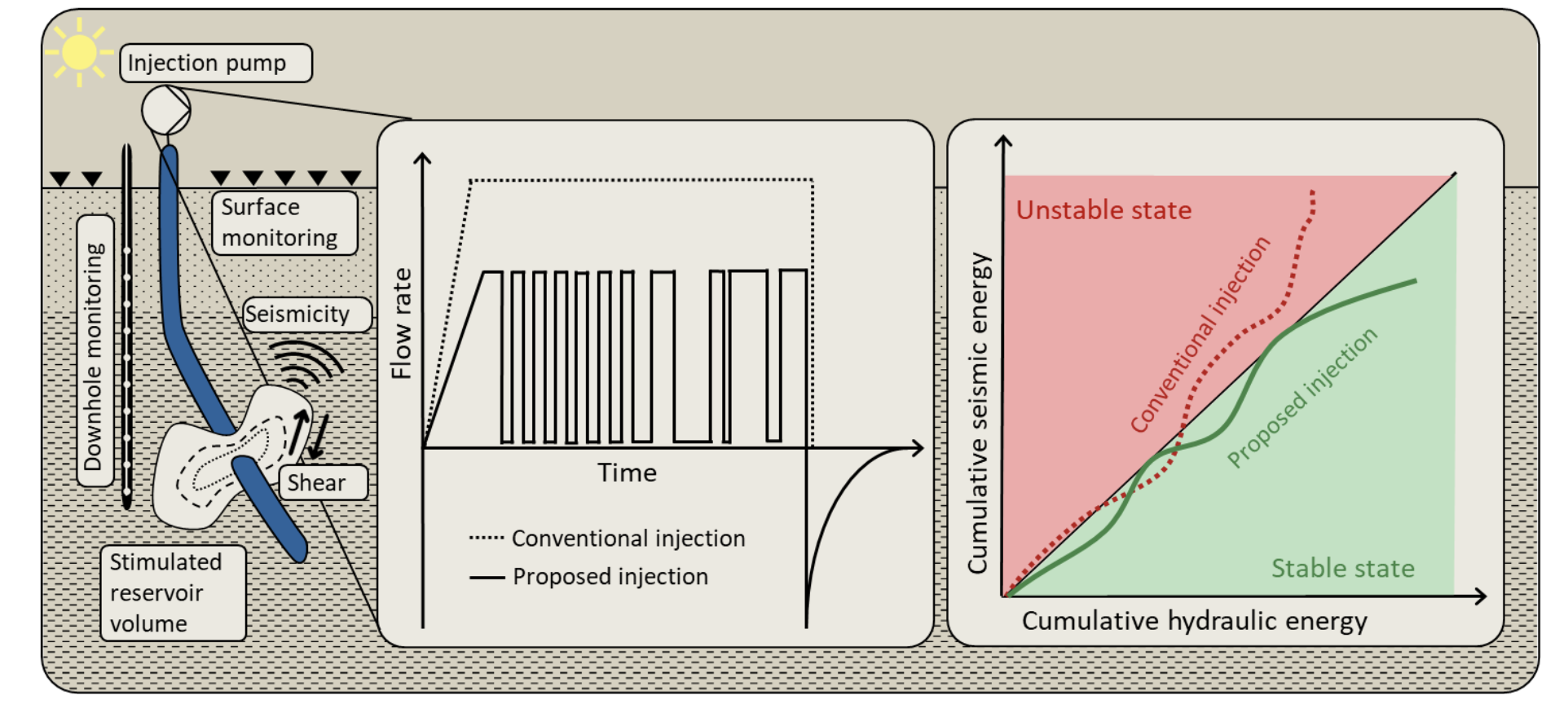
A central innovation in UPLIFT is an adaptive approach to reservoir stimulation: injection parameters are continuously adjusted in response to real-time seismic monitoring, so that hydraulic energy input — and therefore permeability — can be maximised while critical seismicity increases are detected in advance and managed.
The consortium
UPLIFT brings together 8 partners across 4 EU Member States and 1 Associated Country: 3 research centres, 2 universities, 2 SMEs, and 1 European non-profit association.
-
Coordinator
GFZ
GFZ Helmholtz Centre for Geosciences
Germany
-
CU
Univerzita Karlova
Charles UniversityCzechia
-
GES
Geo-Energie Suisse AG
Switzerland
-
Fraunhofer IEG
Fraunhofer-Gesellschaft zur Förderung der Angewandten Forschung
Germany
-

SOL
Solexperts AG
Switzerland
-
FCC
Fraunhofer-Chalmers Centrum för Industrimatematik
Sweden
-
EFG
European Federation of Geologists
Belgium
-
ETH
Eidgenössische Technische Hochschule Zürich
Switzerland
Latest news
-
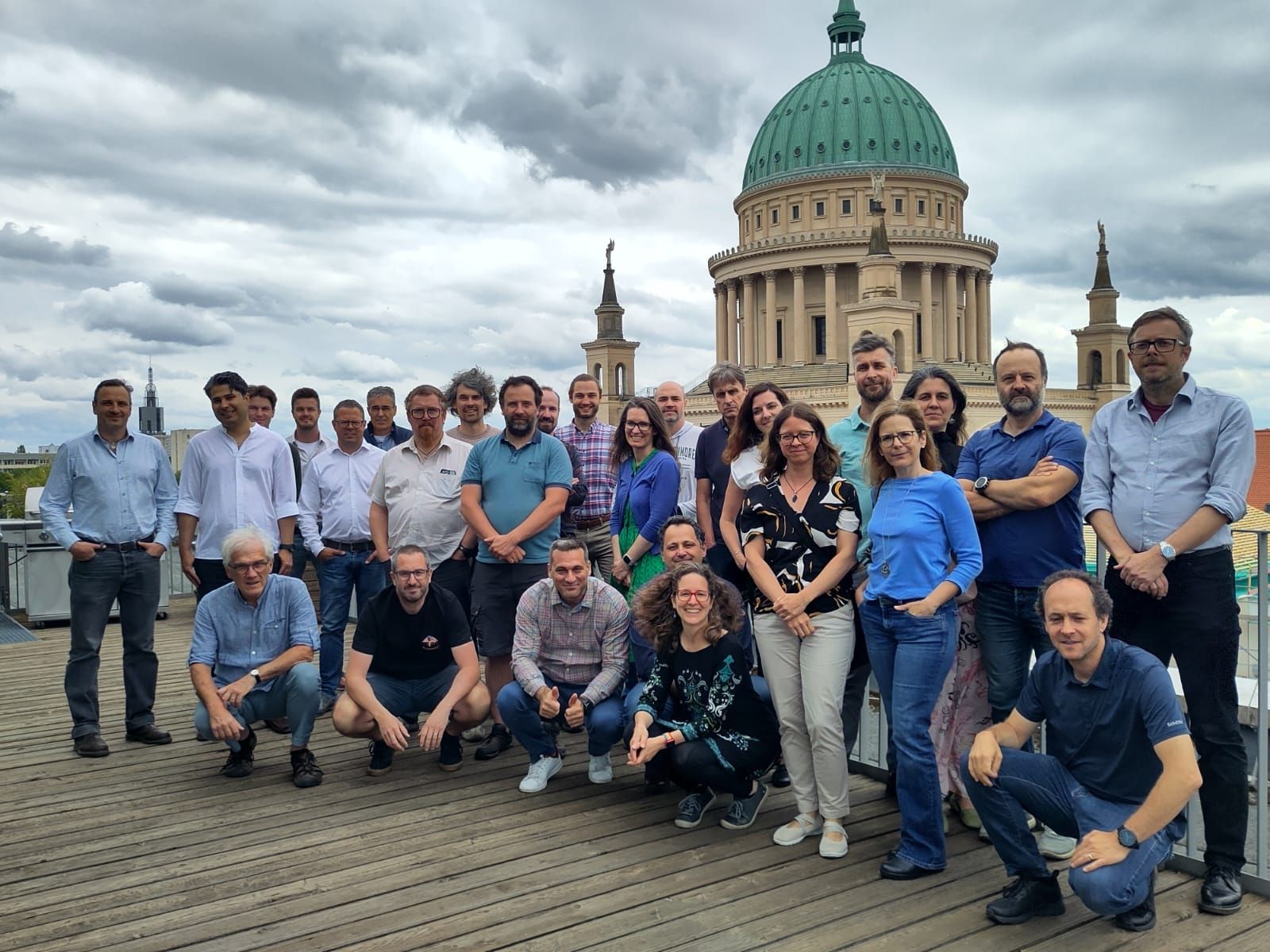
UPLIFT Project Launches
New Horizon Europe project to demonstrate safe and efficient Enhanced Geothermal Systems for a clean energy future
Stay informed
UPLIFT will share results, demonstration updates, publications, and stakeholder events as the project progresses. Choose how to keep up:
Follow UPLIFT on social media
More channels are rolling out progressively. The first accounts are live now; remaining channels will be activated over the coming months. Bookmark and check back, or subscribe to the newsletter to be notified when each channel goes live.
Join EGS-Connect — the European EGS community of practice
EGS-Connect will become a LinkedIn-based Community of Practice, bringing together researchers, industry, and policy stakeholders working on Enhanced Geothermal Systems. The group will be opened during the first project months.
Contact
-
Project Coordination
GFZ Helmholtz-Zentrum für Geoforschung
- Julie Friddell — Project Manager
- Hannes Hofmann — Technical Coordinator
-
Communication Lead
European Federation of Geologists (EFG)
Communication, dissemination & exploitation lead.